My last post was on May 11th, two months ago. Until then I had a good routine, posting weekly, excluding vacations. Then it all went wrong.
I had been experiencing issues with my left shoulder for months. I would start to feel pain after a few minutes while swimming. Gradually the pain free time reduced and eventually I had to modify my stroke to be able to swim at all.
Over the Easter weekend I went orienteering in rough Scottish forests. I fell over a lot, inevitably landing on my left side each time. After that I started to notice a reduced range of motion in everyday life.
Frozen Shoulder
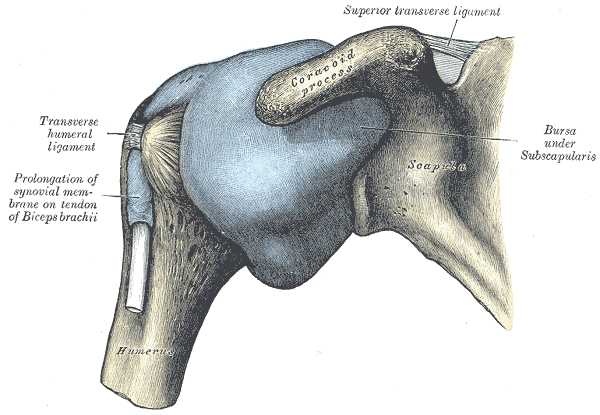
Henry Vandyke Carter - Henry Gray (1918), Anatomy of the Human Body: Gray’s Anatomy, Plate 327, Public Domain
I went to the physio on May 13th. She diagnosed the early stages of frozen shoulder.
I had the same problem in the same shoulder 13 years ago. I’d forgotten which shoulder it was but the physio’s notes from the time confirmed that it was the same one. I remember it being annoying rather than anything else. It was eventually sorted out after a steroid injection into the shoulder joint performed at my GP surgery. Apparently, it’s unusual to have it in the same shoulder twice.
The physio suggested some exercises to use the range of movement remaining and stop it getting worse. Unfortunately, over the next two days everything accelerated, with a drastic reduction in range of motion and increasing pain if I pushed too far.
Crisis
On the morning of Friday, May 15th I reached crisis point.
I have the same clothing philosophy as Steve Jobs. I found something I like and wear it all the time. In my case, it’s a T-shirt and a black crew neck wool sweater. As my range of motion decreased, I found it increasingly hard to get dressed. This morning it was incredibly difficult, even with Lucy helping me.
We got it done, but I’ve never experienced pain like it. Lucy said I went completely white. I was sweating like crazy. I felt nauseous and went into the bathroom to throw up. Nothing happened, so I staggered back out and then my legs collapsed underneath me. I smashed my head into the wall as I went down. Inevitably onto my left side.
“Why did you do that?”, asked Lucy. I really don’t know why it happened.
I lay on the floor while Lucy dialled 111 (the UK number for urgent medical help that isn’t life-threatening). She took the call handler through what had happened and after going through the script that checks for a heart attack suggested that I needed to be seen by my GP or at the walk-in clinic in town. Ideally, within the next 2 hours.
I wasn’t going anywhere by myself. It’s now about 7.45am. The GP surgery didn’t open until 8am and I had no idea whether I’d be able to get a same day appointment. Lucy had time before work to drive me to the walk-in clinic or GP but only if we left immediately.
The walk-in clinic seemed like the obvious choice. Lucy dropped me off and headed into work. In my case, walking is done slowly, with great care, and with my left arm clamped against my side. It’s surprising how unbalanced that makes you feel.
Luckily, there were only 5 people ahead of me in the queue. After 15 minutes I was called in to see the triage nurse. I got my first real dose of sympathy for the day and confirmation that I needed to see the doctor.
Back to the waiting room for another 15 minute wait. The doctor started with a cranial nerve exam to confirm that I didn’t sustain any brain damage when I fell. He then moved on to check my very limited shoulder joint movement and make me swear when he poked a particularly tender bit. He seemed happy with the diagnosis of frozen shoulder.
I hadn’t appreciated that the walk-in clinic is very limited in what they can do. In my case, he gave me a choice of three drugs that he could prescribe to get me through the next 48 hours. I would have to go to my GP on Monday.
Drugs
The menu included Naproxen, Cocodamol and Diazepam.
Naproxen is a NSAID, like a super strong version of Ibuprofen. The doctor ruled it out as it can increase blood pressure and I’m already on medication for high blood pressure.
Cocodamol is a mixture of paracetamol and codeine. Codeine is an opioid painkiller. You can buy cocodamol over the counter in pharmacies. I’ve heard lots of stories from friends and relatives who found it unhelpful as a painkiller with lots of unpleasant side effects.
That left Diazepam. Diazepam is the same drug as Valium. It has lots of effects. In my case, the main purpose is as a muscle relaxant. A lot of the pain is caused by all the muscles around the shoulder tensing up and spasming to try and protect it, making the whole area incredibly tender.
I left with a prescription for 6 diazepam tablets and got an Uber home. The hardest part was fastening the seat belt.
My nearest pharmacy is 5 minutes walk, so I staggered over after a couple of hours, once the prescription appeared in the NHS app. I took 3 diazepam that day (maximum dose). There was an almost instant muscle relaxant effect while also making me very drowsy. I slept well that night for the first time in days.
That left me 3 tablets to make it to Monday. I decided to take one each evening to ensure a reasonable night’s sleep.
I had to dig to the bottom of my wardrobe to find clothes I could wear. I needed something where I could carefully slide my left arm into the sleeve, wrap it around my back, and then get my other arm in and fasten at the front. All I could find was some old Autodesk and AWS swag. A zipped hoodie and a track suit top. I couldn’t face trying to get a shirt on.
GP
Regular GP appointments have at least a two week lead time. To get an on-the-day “emergency” GP appointment you need to hit the phone lines when they open at 8am. Then be prepared to wait in a queue while hoping there will be some appointments left when you get to the front.
As I knew I’d need to see a GP after my visit to the walk-in clinic, I rang on Friday to see if I could prebook an emergency slot for Monday. No dice. The phone lottery is the only way.
I made my first call at 7.59am in case they opened the lines early. A few redials later and I finally got through at almost exactly 8am. Second in the queue. Result. Got an appointment for 9am that morning.
The GP checked my range of movement and concluded it was less than 10 degrees. He prodded and poked, finding the incredibly tender spot where the biceps tendon connects to the shoulder. Overall summary: “that’s pretty rubbish”.
For the short term I get a new prescription for 14 diazepam tablets and 56 Naproxen. The GP wasn’t worried about my high blood pressure and thought it more important to get the pain and inflammation under control.
The range of movement is limited enough for an urgent referral to a specialist. Unfortunately, even urgent cases can take weeks or months to be seen. However, there is another GP at the practice qualified to perform steroid injections, which could be done much more quickly. They’ll get back to me.
Steroid Injection
Next day I get a call saying that there’s an appointment available at 4.45pm same day for an injection. Unfortunately, not at my local surgery. Fortunately, Lucy wasn’t working that day and was able to drive me.
There was a ten minute wait and then I was called through. The doctor did a quick check of my range of movement, then rattled through a list of possible problems from the procedure: 1 in 2000 chance of infection in the joint, damage to tissue around joint if you have too many injections, surgeons will not perform joint surgery for 6 months after an injection.
I agreed to go head. He applied an antiseptic wipe to the entry point at the back of my shoulder, told me that I’d “feel a sharp scratch”, then straight in. No anaesthetic. I could feel the needle going in but not really any pain. All over in 30 seconds.
I was told to do nothing for 48 hours, then start exercises. I was also warned that it may take two weeks to feel the full effect. The steroid injection reduces inflammation and buys you time to get the joint moving again. It’s the exercises that make the difference.
Ups and Downs
I started exercises again a couple of days later. The tenderness and pain on movement reduced day by day. There was no real change in range of movement for a week, then I started seeing a steady improvement. I continued with one diazepam in the evening to help with sleep for a week. I didn’t need it any more after that.
Up to this point I had continued walking with my arm pressed against my side. I felt good enough to try walking with the arm placed normally, gently swinging as I walked. I managed 200m.
That clearly overdid it. I had a couple of days of things getting worse again, then back to improvement.
I kept going with the Naproxen until I ran out, then switched to 3 x 400mg Ibuprofen. I wanted to keep on top of the inflammation.
Range of motion continued to increase, I was able to walk normally without problems, getting dressed was no longer a major drama, and I was even able to get my backpack on again. I was particularly grateful that I was able to wear shirts rather than my increasingly grubby track suit top.
After a week of full dose Ibuprofen I decided to switch to taking them on demand. Things gradually deteriorated over the next two days with an increase in tenderness and no further improvements to range of motion. I started regular Ibuprofen again but it didn’t seem to make any difference.
Reset
I determine my maximum range of motion by stopping when I feel pain. I found that I can move much further if I lift my left arm using my right. The pain that’s stopping me is due to muscles around the shoulder spasming under load.
Time to reset what I’m doing. I booked another physio appointment for two days later. I also messaged the GP via the NHS app to ask for another Naproxen prescription. The prescription came through the same day.
The physio told me that the latest research shows gentle movement to be as effective, or more effective, than pushing to limits. Move within the comfortable range, little and often. Use supported lifts to move further as long as it’s still comfortable. Finally, start simple resistance work to try to build the muscles around the shoulder back up. For example, pushing gently against a wall for a few seconds in each direction.
It seems to be working. I’m taking one Naproxen in the morning, with another in the evening if I need it. Each dose is effective for up to 12 hours.
I’m following the exercise regime. I’m finding that I use my left arm more often, without really thinking about it. I can reach my face, cut up food for myself, even type for a few minutes at a time. Sometimes I try to do something and it doesn’t work but so far without any setbacks.
My range of movement is improving everywhere. Swinging front and back works best. I can swing forwards over 90 degrees with assistance. Worst is out to the side. There I’m still limited to at most 45 degrees with assistance, and more like 20 degrees without. All my exercise comes from walking, up to two hours at a time.
Blogging
You’re reading this, so clearly I’ve started blogging again. It’s going to take some time to get back to my previous weekly cadence. Currently I can type for 20 minutes at a time before my left arm seizes up. I’ll post on an ad-hoc basis for now.
Prognosis
Most people make a full recovery from frozen shoulder. However, it does take time. Given the stage I’m at now, it can take between 4 and 24 months.
Fingers crossed that I’m at the near end of that range.